PROJECTS, 2025–2026
1/ Look to gain a new way of knowing, 2026
2/ Burning Inside: A print exchange folio and exhibition project, November, 2025 – March, 2026
3/ Reel: 2020–2025, an online viewing space, featuring variations of original works on paper and large scale collages in a different format: a continuous digital reel
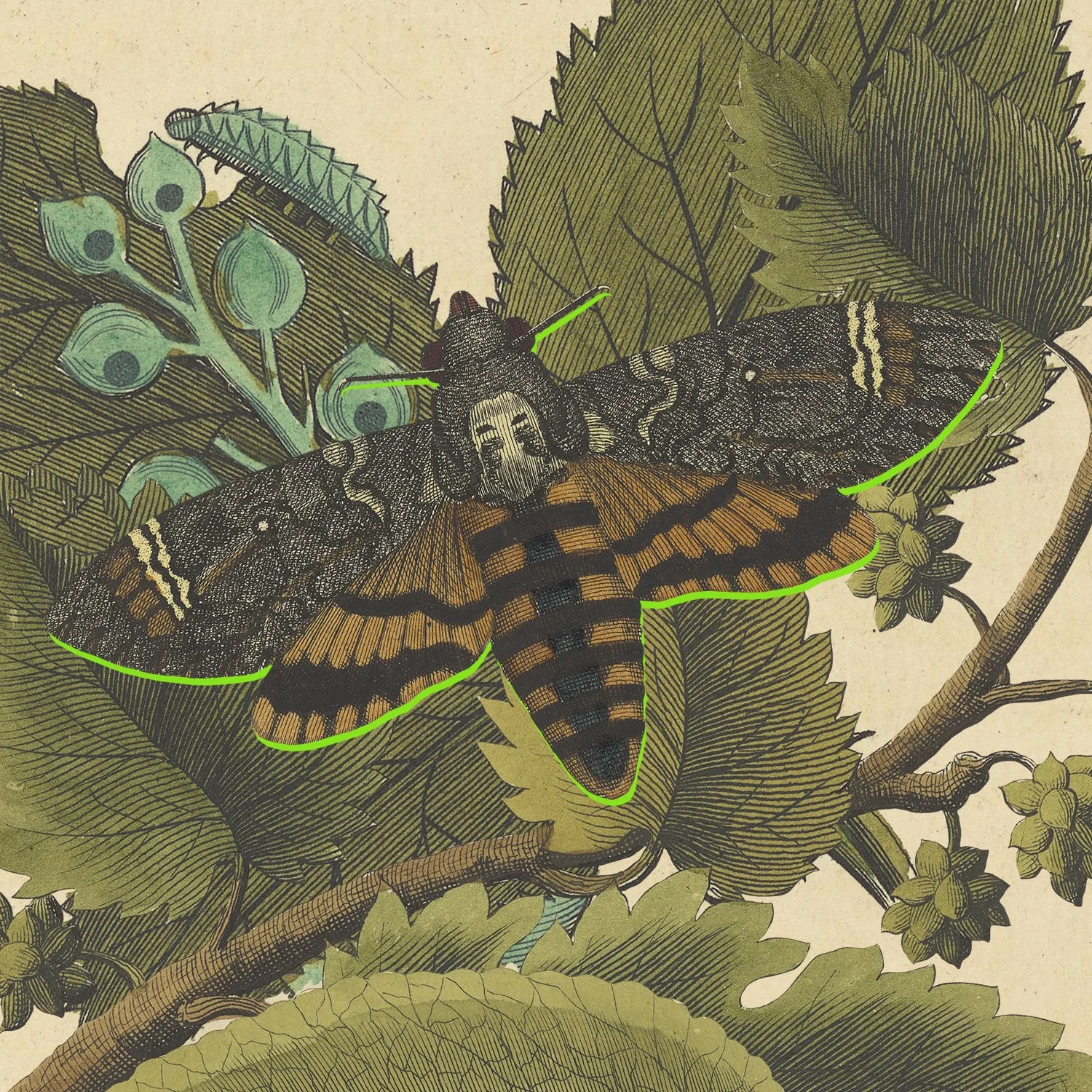
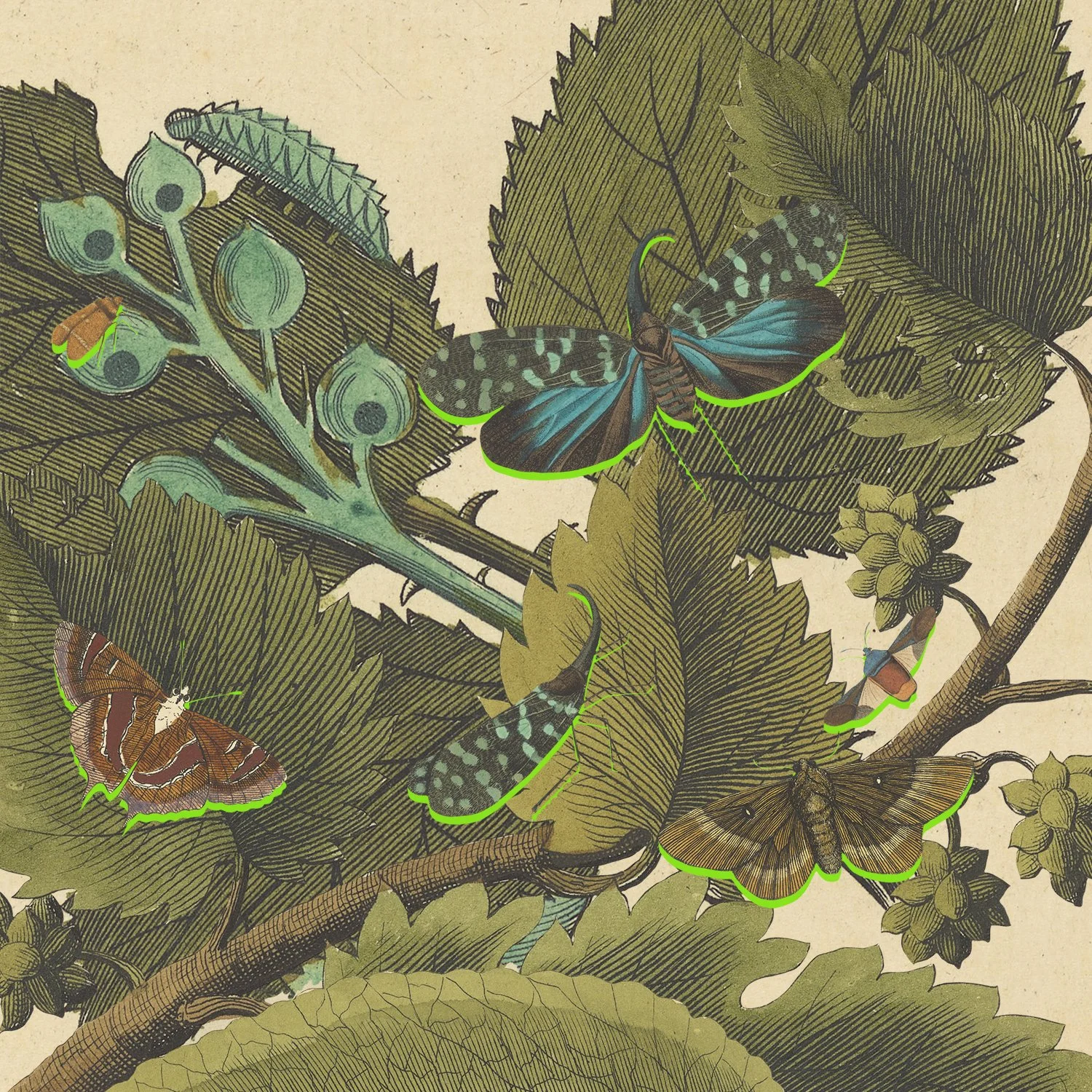
1/ Gracia Haby & Louise Jennison
Looking to gain a new way of knowing
2026
For the RMIT Print Exchange Portfolio
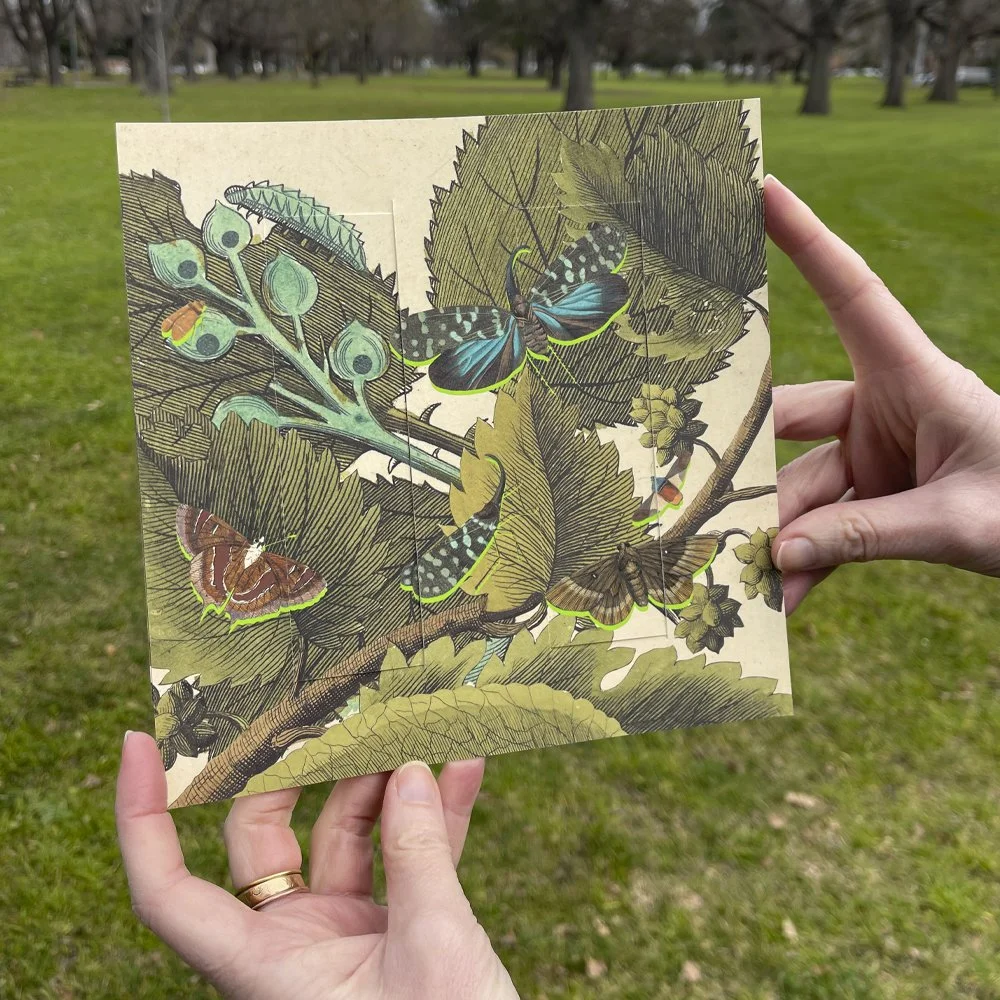
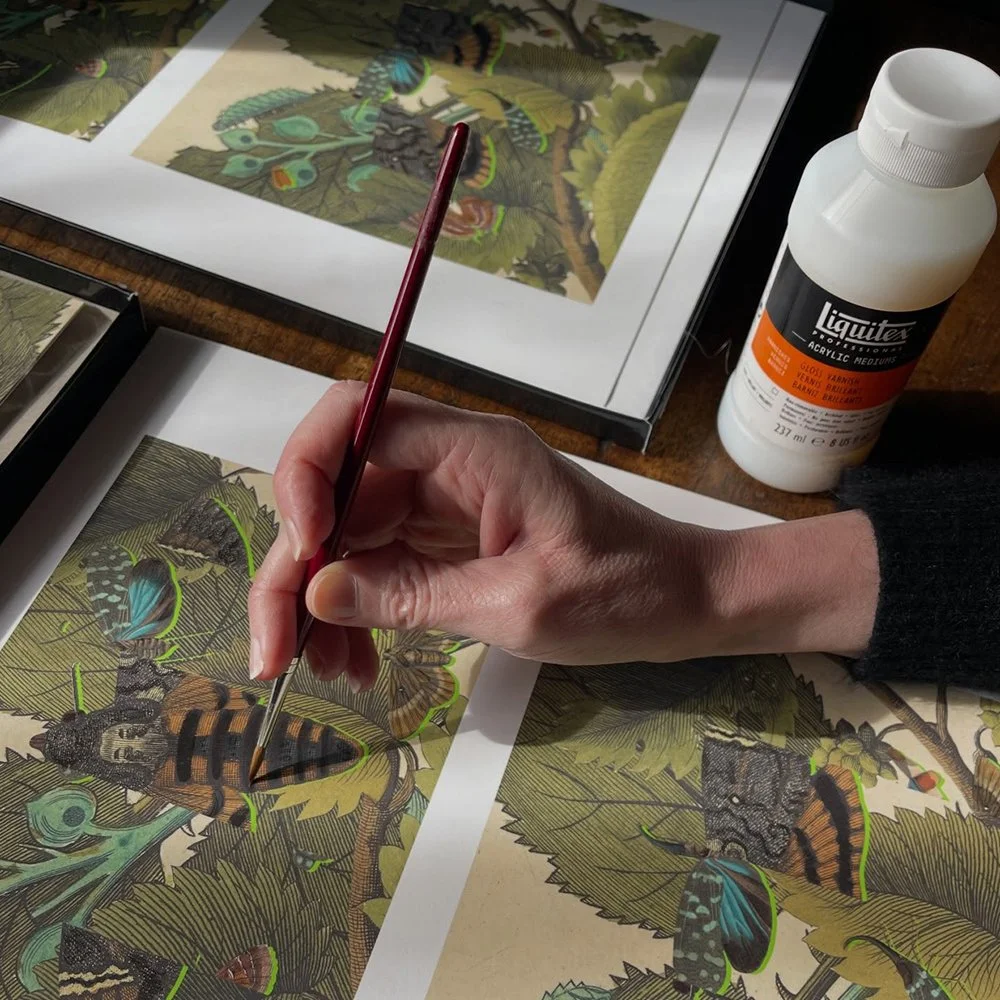
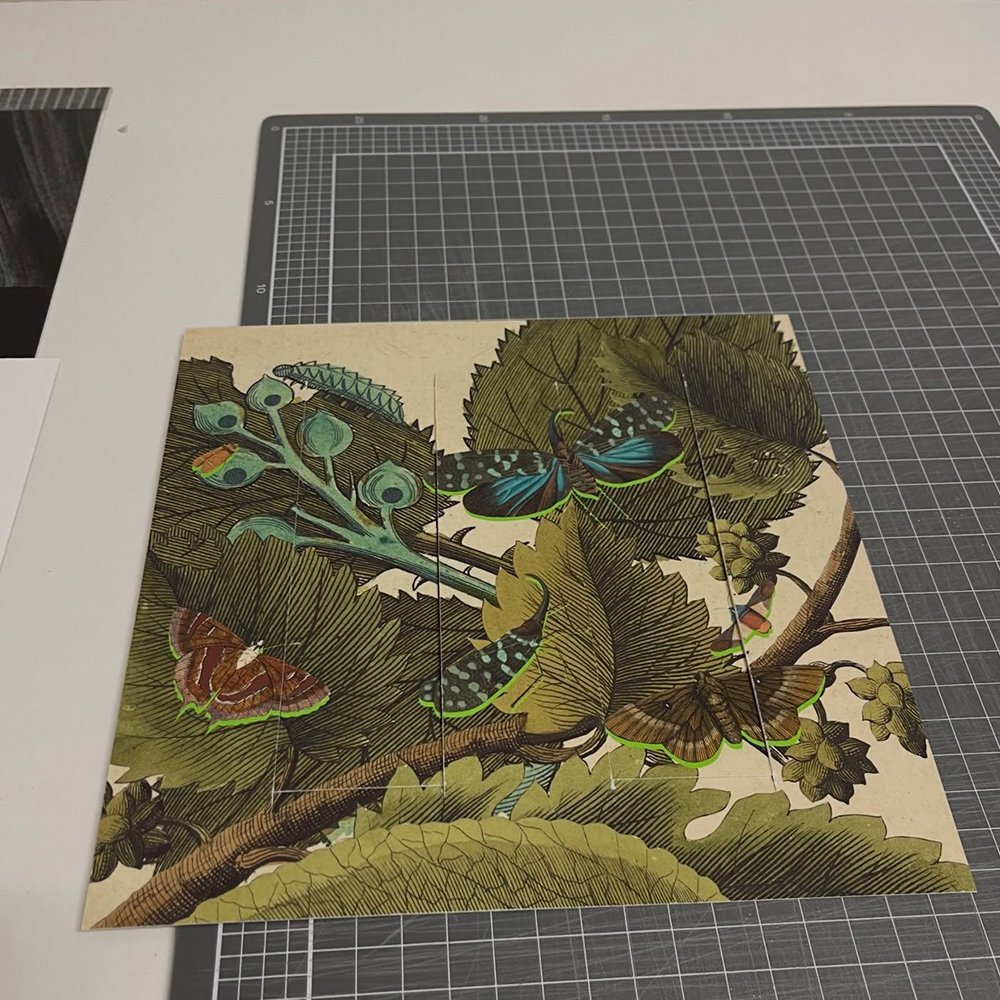
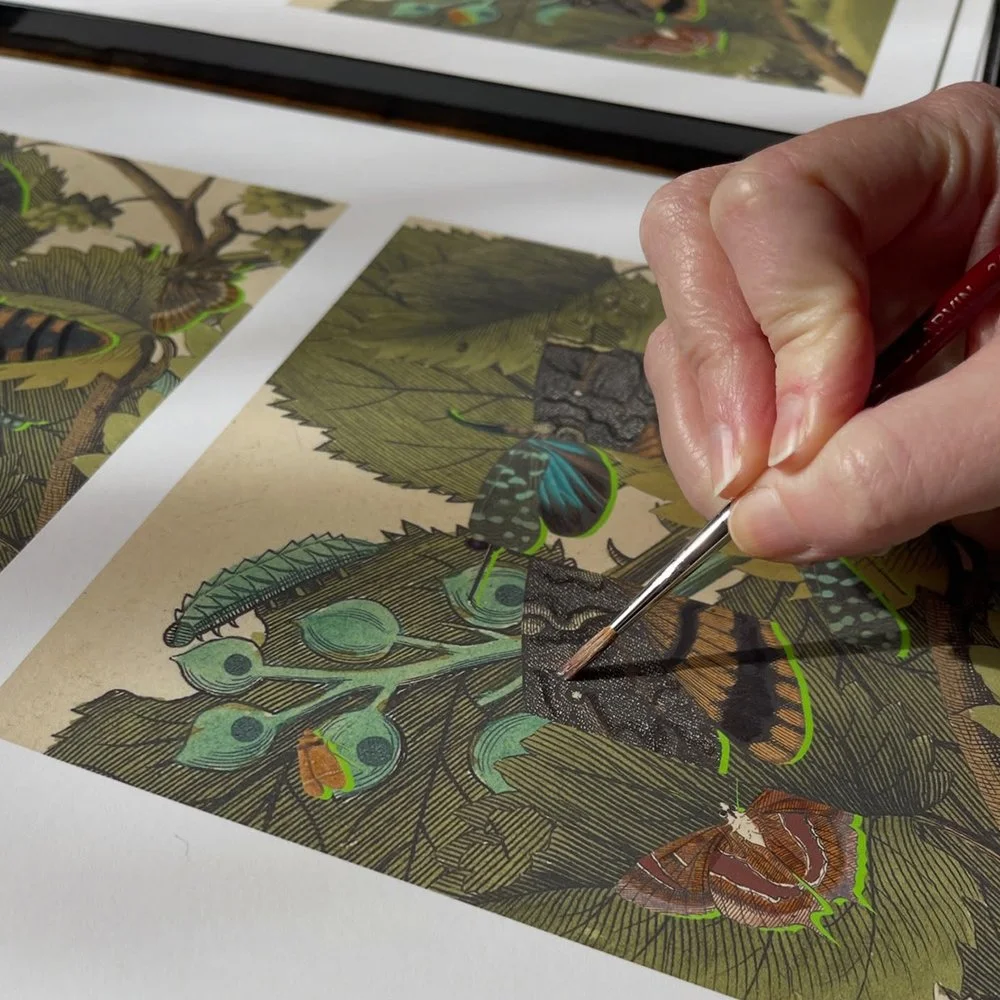
Inkjet print on Canson Rag Photographique 310gsm, with Liquitix gloss varnish highlights
20cm X 20cm
Edition of 26, with 10 artists’ proofs
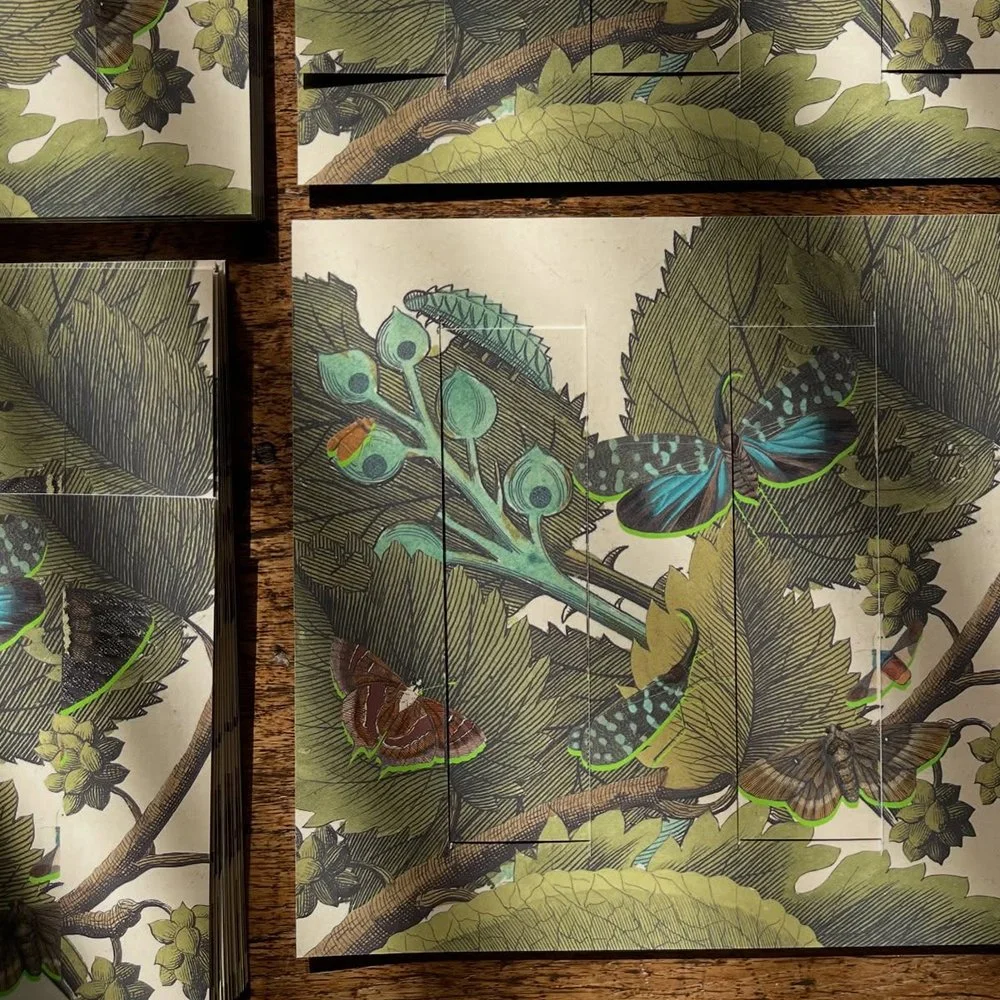
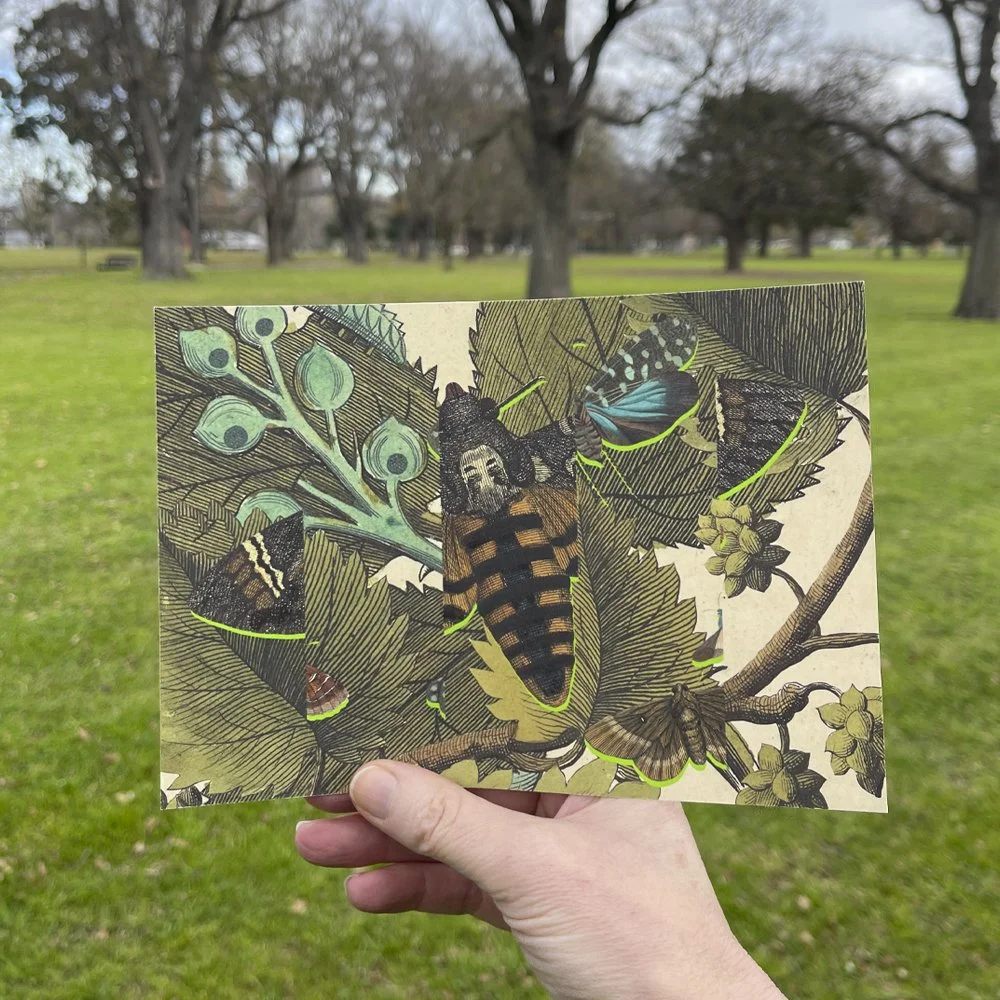
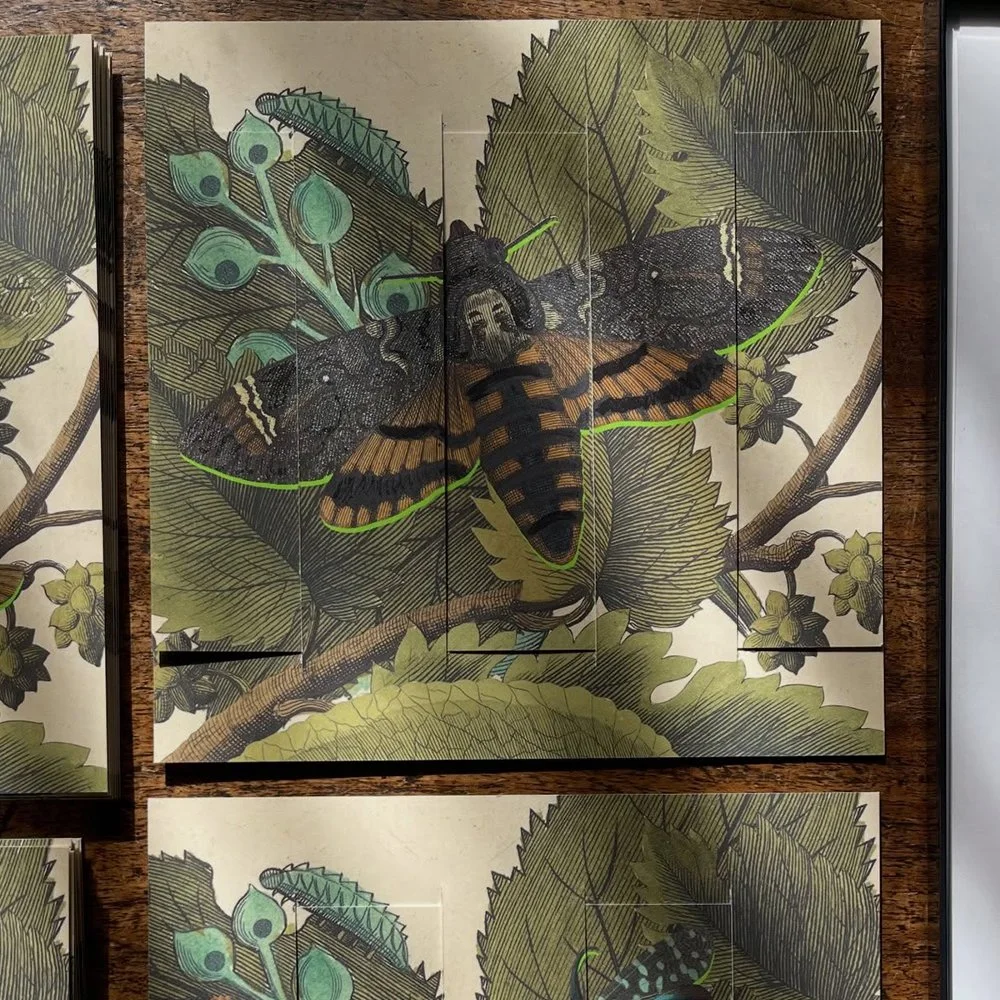
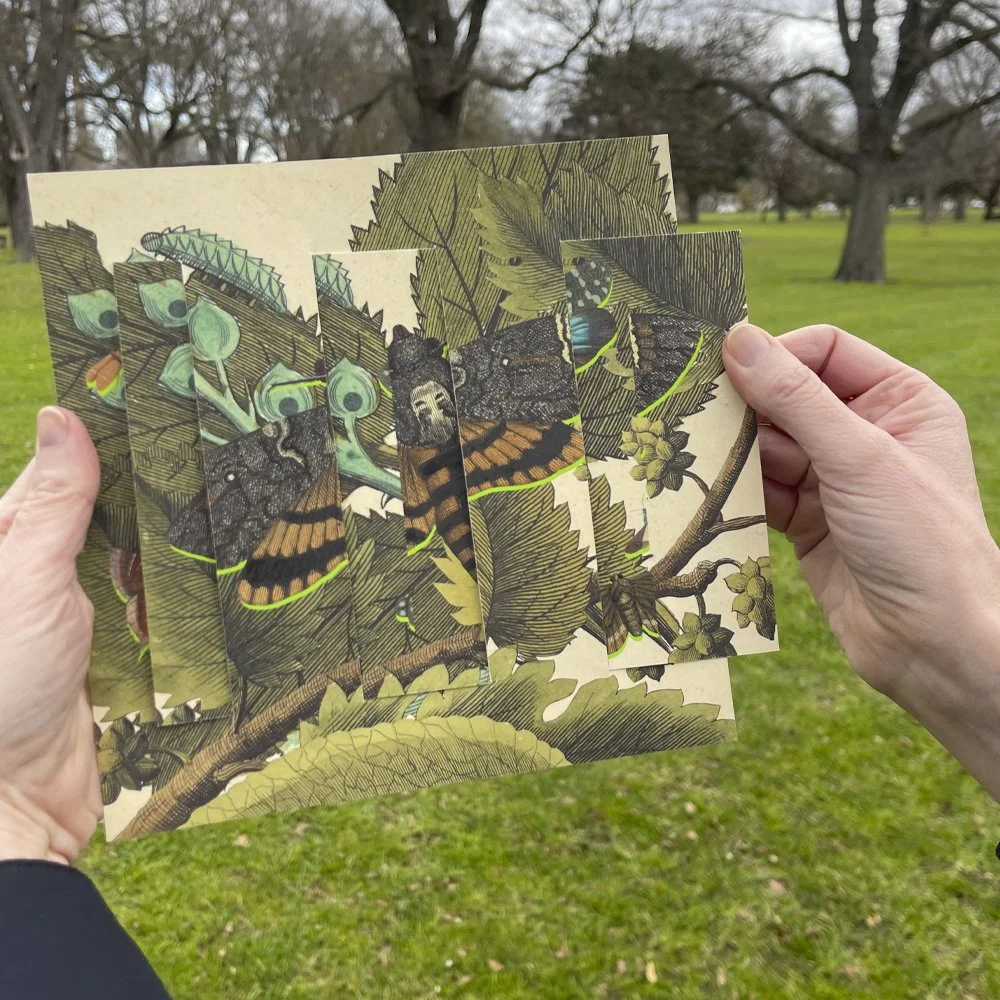
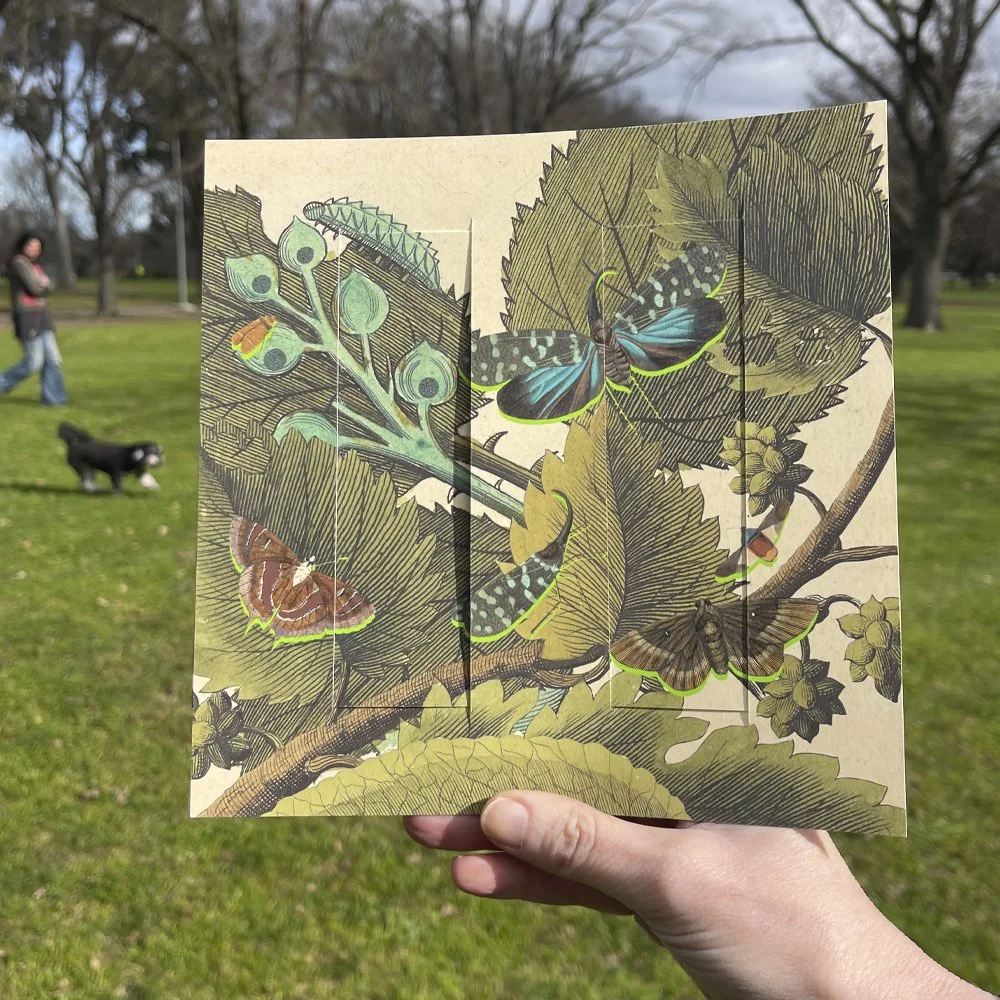
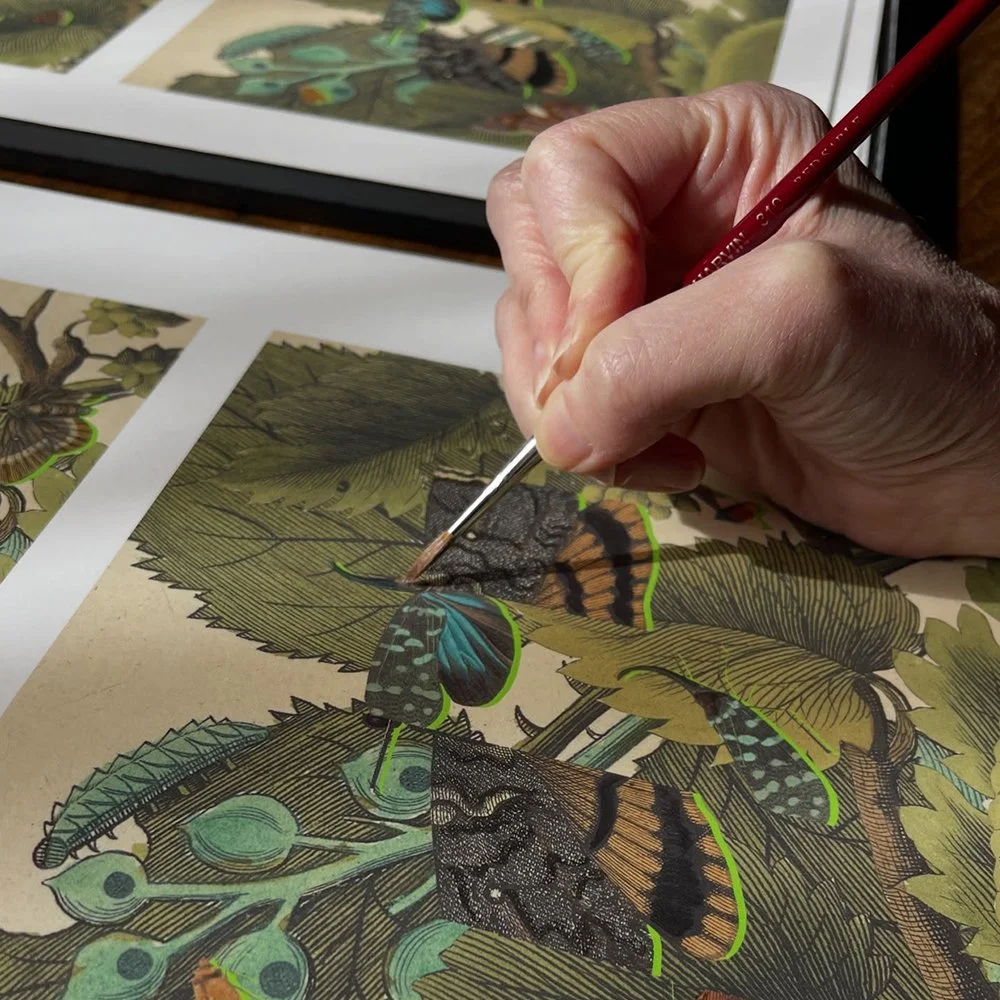
Created especially for the RMIT University School of Art 2026 Print Exchange Folio, this print slots together two different ways to reveal two different scenes, and incorporates elements from State Library Victoria’s edition of Eleazar Albin’s A natural history of English insects, London, 1720. A natural history of English insects includes one hundred vibrantly coloured plates that capture the lifecycle of insects “curiously engraven from life”, with each plate dedicated to an important patron, almost half of which were female subscribers.
This is our fourth print for the RMIT Print Exchange Portfolio.
﹏
RELATED LINKS,
POLLINATOR OUTLINE, 2020 EXCHANGE PORTFOLIO
WHERE WE CAN ENCOUNTER EACH OTHER, 2023 EXCHANGE PORTFOLIO
CHATTER, RATTLE, NODDY TERNS OVERHEAD, 2024 EXCHANGE PORTFOLIO
SPECIMEN 1963
RELATED POSTS,
LOOKING TO GAIN A NEW WAY OF KNOWING
“PRACTICE ANY ART… TO MAKE THE SOUL GROW”
A COUPLE OF QUESTIONS
SANCTUARY
BOCK, BOCK, WENT THE TAWNY
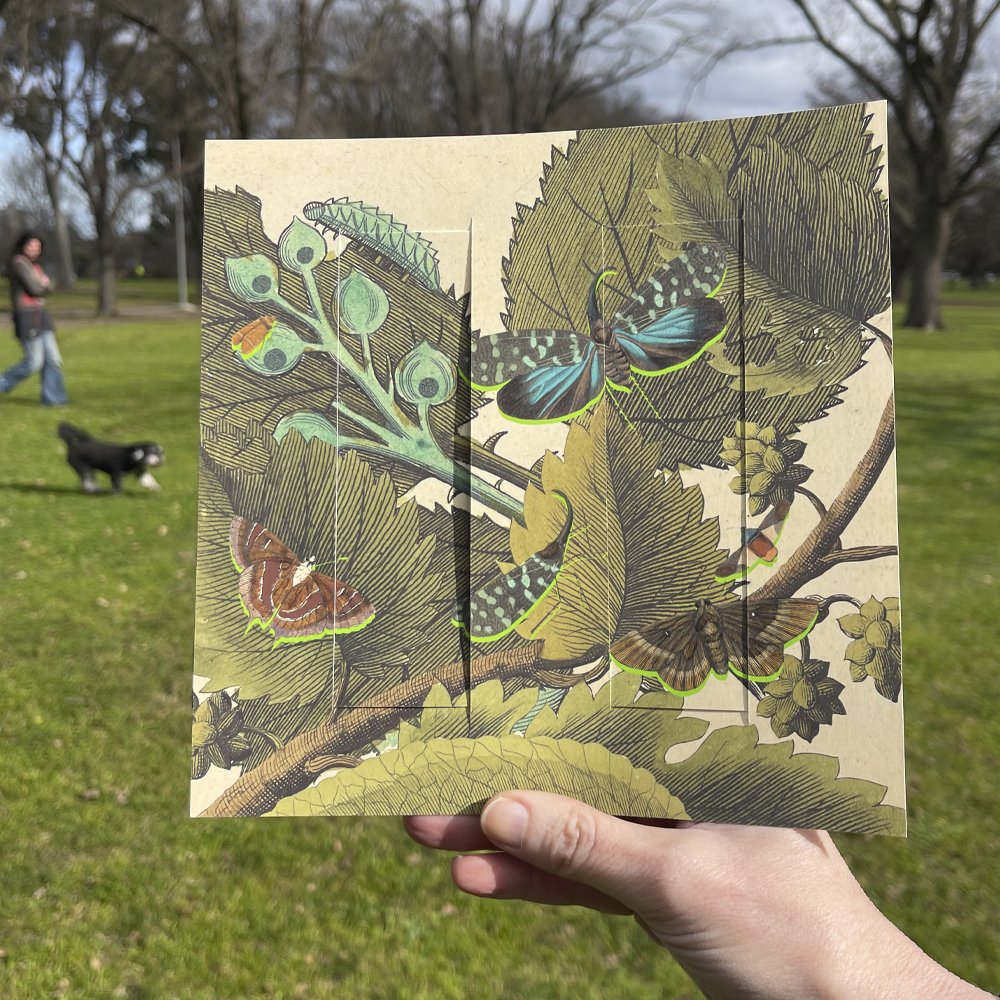
Gracia Haby & Louise Jennison
Look to gain a new way of knowing, 2026
Inkjet print on Canson Rag Photographique 310gsm, with Liquitix gloss varnish highlights.
One of ten unframed artists’ proofs, from an edition of 40.
Image size 20cm X 20cm
Paper size 20cm X 20cm
Created especially for the RMIT University School of Art 2026 Print Exchange Folio, this print slots together two different ways to reveal two different scenes, and incorporates elements from State Library Victoria’s edition of Eleazar Albin’s A natural history of English insects, 1720.

2/ Gracia Haby & Louise Jennison
Because of our inertia
2025
Inkjet print on Canson Arches 88 310gsm
19 x 28 cm
Printed by Arten
Edition of 29, with 10 artists’ proofs
Created especially for Burning Inside: A print exchange folio and exhibition project, curated by Rona Green and Thomas A Middlemost
From Katherine Rundell’s book, The Golden Mole and Other Vanishing Treasure, foregrounding the magnificence around us which we risk losing before we’ve even began to understand, told through 22 species either endangered or containing a subspecies that is endangered, sprang our response to this year’s print exchange theme: Burning Inside. “So much can still be saved. It is the greatest task, now, of everyone alive: to keep it from the flames”[i]. As artists and wildlife carers, most of the magnificence around us which we encounter needs attention and care, and these actions are what fuels us.
We have learnt, and are learning, everything from the animals in our care, and in doing so, it has reawakened a way of seeing. Because ‘nature’ is not ‘out there’, but everywhere, everything, interconnected. Just as our care work and artwork is becoming indivisible, it is one. Multifaceted and glorious.
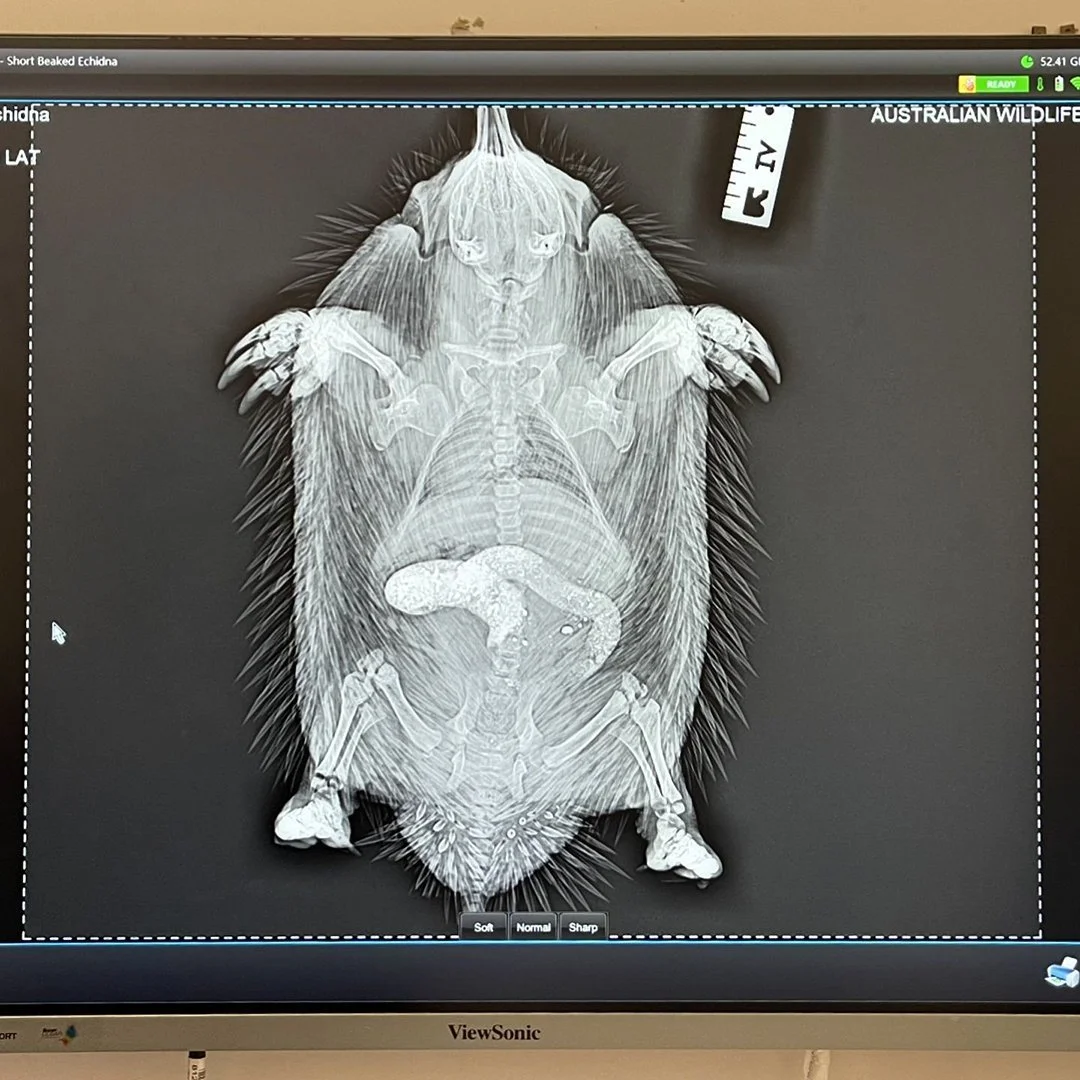
In the company of a glass negative echidna[ii], a Little lorikeet, and a Varied lorikeet[iii] with a bright red cap, we step up, to ensure the world remains “a body of unimaginable splendour [turning] on its axis, calling us to its aid”[iv].
[i] Katherine Rundell, The Golden Mole and Other Vanishing Treasure, London: Faber & Faber, 2023, p. 180.
[ii] From Walkabout magazine: original photographs and associated records, 1934–1974, Box 10, in the collection of State Library New South Wales.
[iii] A Little lorikeet and a Varied lorikeet as drawn by Silvestor Diggles, from the third volume of Ornithology of Australia, commences with Cacatua and ends with Strepsilas, ca. 1863–1875.
[iv] Katherine Rundell, The Golden Mole, p. 186.
●
Burning Inside
BECAUSE OF OUR INERTIA CREATED ESPECIALLY FOR BURNING INSIDE
FRIDAY 14TH OF NOVEMBER, 2025 – SATURDAY 14TH OF MARCH, 2026
AN EXHIBITION CURATED BY DR. THOMAS A. MIDDLEMOST AND RONA GREEN
LIBRARY, LEVEL 4, BUILDING 13, CHARLES STURT UNIVERSITY, WAGGA WAGGA CAMPUS, BOOROOMA STREET, WAGGA WAGGA, NSW
Burning Inside is a defiant, challenging print exchange portfolio and exhibition project created in response to the violent, chaotic, and incendiary times we face. Conceived by Rona Green and Dr. Thomas A. Middlemost in November 2023, the project brings together thirty artists whose works explore the emotional, political, and environmental dimensions of inner fire — whether personal, collective, or symbolic.
The exhibition showcases a diverse group of artists at various stages of their careers. Among the celebrated practitioners are Raymond Arnold, Kaye Green, and Michael Schlitz, all based in Lutruwita (Tasmania). Arnold’s screenprint reimagines an eighty-year-old work by French artist Maurice Albe, depicting mothers and children as casualties of war and violence. Kaye Green’s Huon Pine Bonsai lithograph with chine collé subtly weaves environmental advocacy, Japanese cultural aesthetics, and the traditions of lithography into a cohesive, contemplative piece. Schlitz, employing prized Nepalese paper and delicate woodcuts, presents a phoenix rising from flames — an enduring emblem of hope.
G.W. Bot, renowned for her virtuosic printmaking and sculpture, offers a linocut of an evocative gridded window motif that invites introspection. Master wood engraver Rosalind Atkins collaborates with the inimitable eX de Medici — together these artists invert familiar landscapes: the sea becomes a flaming sky, and trees float untethered. In Rona Green’s linocuts, animals emerge as radiant personalities, particularly Onyx, a prowling black cat symbolising Australians’ conflicting affection for, and disdain toward, felines throughout the land. Mezzotint specialist Greg Harrison contributes a richly detailed nocturnal seascape — crashing waves, acanthus borders, broken spears, mythic curiosities, and the faint hint of a lurking monster.
Not all participants are traditional printmakers. The aforementioned eX de Medici is a tattooist, watercolour artist, and photographer. Acclaimed painter Lucy Culliton, previously known for monotype prints of pigeons, now turns her attention to her own greyhounds — her compassion alight with empathy for the injustices endured by this breed. Elliott Fox channels his outrage into a striking thirteen-layer screenprint, also portraying a greyhound, while Hollie Moly’s vibrant, detailed screenprint doubles as an activist union poster — a direct, impassioned expression of anger toward a broken social system.
Also featured are compelling, distinctive works by Brendan Huntley, Juanita McLauchlan, Chris Orr, Patricia Agus, Kate Zizys, and Sarah McConnell. Their contributions encompass exuberant use of colour, personal revelation, intricate pattern, social commentary, and environmentalism. Through dynamic handling of concept and technique, they bring attention to subtle threads of an underlying sense of interconnectedness.
Tony Ameneiro, August Carpenter, Julian Laffan, and Dr. Middlemost approach arboreal and landscape imagery through a meditative lens. They all make use of a restrained palette combined with skilful mark making, invoking a feeling of primordial darkness — a state of quiet suspension. The natural world is manifest as a psychological space that may prefigure a future promising emergence from absence.
Further contributions by Gracia Haby & Louise Jennison, Christina Reid, Cathy Ronalds, Kevin Foley, Seraphina Martin, Aaron McLoughlin, Odin Strbac Low, and Vera Zulumovski, offer interpretations of the theme from wholly individual perspectives. Across various printmaking media, their images convey a burning desire to document accelerating species loss, mourn beloved animal companions, honour figures of personal or shared significance, and reflect on the inner mind.
Ultimately, Burning Inside, curated by Green and Middlemost, is an aspirational endeavour: a gathering of artists on different paths and at varying stages of practice, so that each may experience the work of the others. The portfolio extends an open invitation to engage with a broad and vital theme — through provocation, contemplation, shock, or hope. Every response is valid, and each print is exceptional.
The Charles Sturt University Art Collection is honoured to receive a gifted set of the twenty-eight limited edition prints from this project, generously donated by the participating artists. This acquisition ensures that these thoughtful, resonant works will be preserved and appreciated well into the future.
PATRICIA AGUS, TONY AMENEIRO, RAYMOND ARNOLD, ROSALIND ATKINS & EX DE MEDICI, G.W. BOT, AUGUST CARPENTER, LUCY CULLITON, KEVIN FOLEY, ELLIOTT FOX, KAYE GREEN, RONA GREEN, GRACIA HABY & LOUISE JENNISON, GREG HARRISON, BRENDAN HUNTLEY, JULIAN LAFFAN, SERAPHINA MARTIN, SARAH MCCONNELL, JUANITA MCLAUCHLAN, AARON MCLOUGHLIN, DR. THOMAS A. MIDDLEMOST, HOLLIE MOLY, CHRIS ORR, CHRISTINA REID, CATHY RONALDS, MICHAEL SCHLITZ, ODIN STRBAC LOW, KATE ZIZYS, VERA ZULUMOVSKI
Dr. Thomas A. Middlemost and Rona Green
﹏
RELATED LINKS,
WHEREABOUTS
IMAGININGS
BEASTARIUM
TINY BUT WILD
RELATED POSTS,
BRILLIANTLY FAIR
FROM NESTLING TO FLEDGLING
WE ARE CREATURES OF ORGANIC SUBSTANCE
PIECE BY LEAF
CONNECTING THREADS
MARVELS, WINGED AND TAILED
OTI, TOFFEE, & MARBLE
GENTLY FOLDED
ONE YEAR
IN WHICH FLOWERS, POSSUMS AND BATS MAY BE GROWN
WILD TAILS

Gracia Haby & Louise Jennison
Because of our inertia
Inkjet print on Canson Arches 88 310gsm.
One of ten unframed artists’ proofs, from an edition of 29.
Image size 19cm X 28cm
Paper size 19cm X 28cm
Created especially for Burning Inside: A print exchange folio and exhibition project, curated by Rona Green and Thomas A Middlemost.






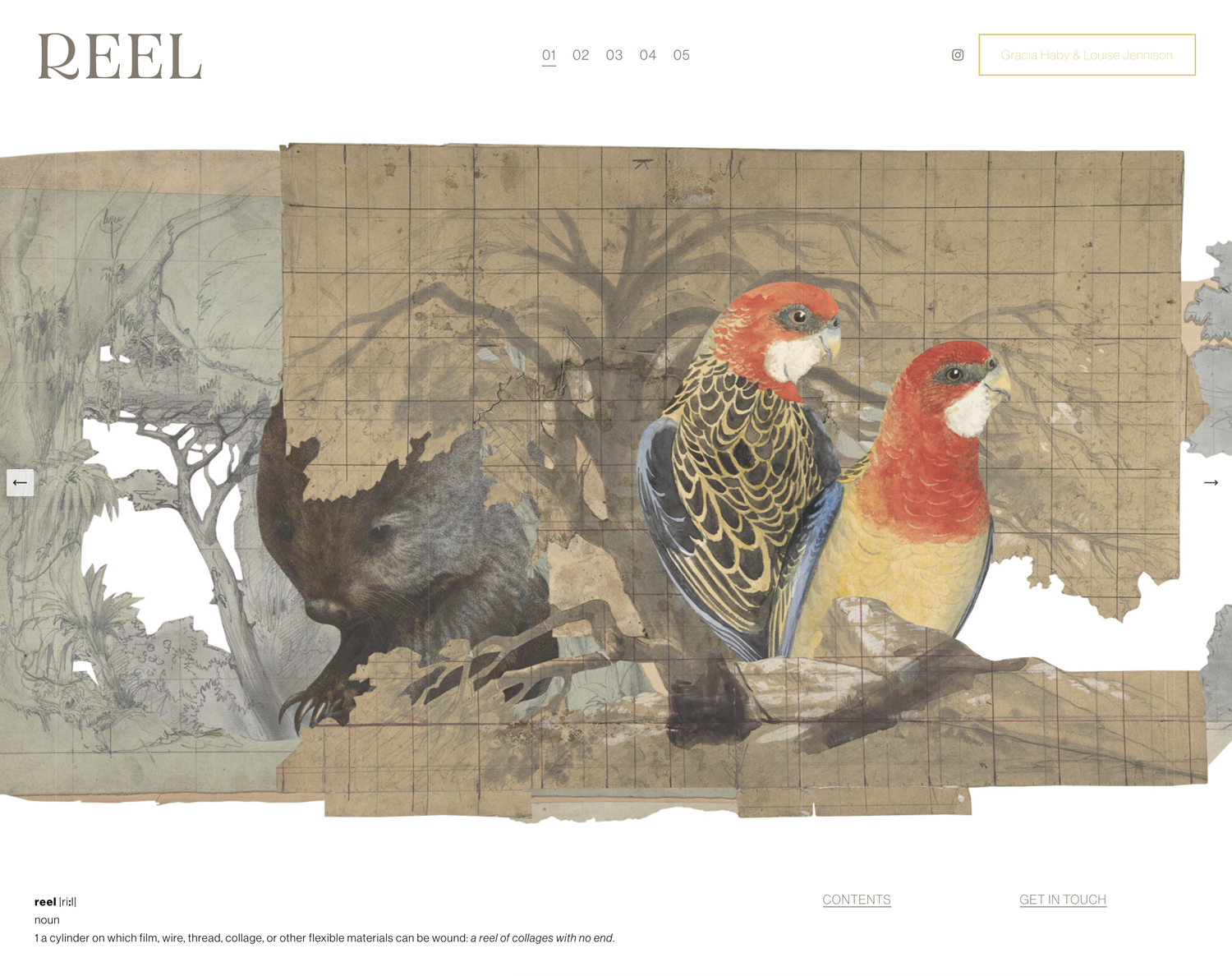
2/ Gracia Haby & Louise Jennison
Reel
2020–2025
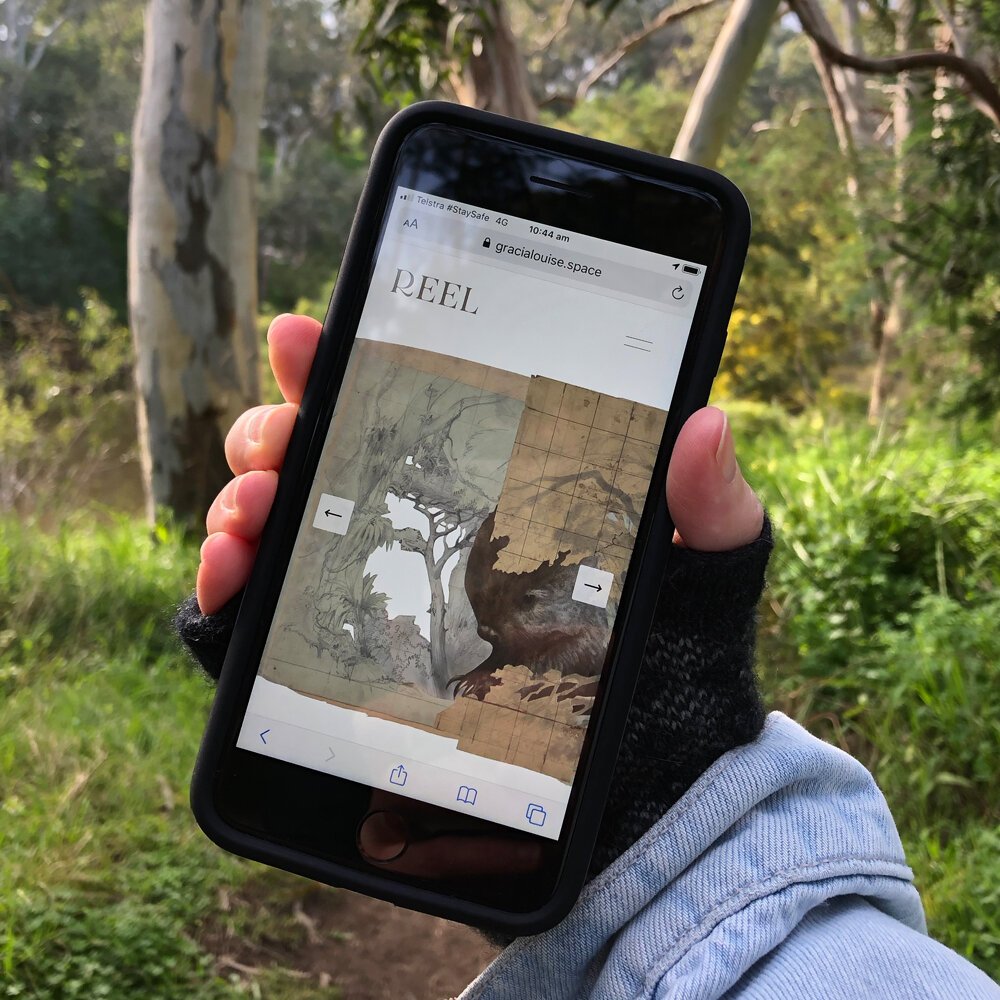
An online viewing space, featuring variations of original works on paper and large scale collages in a different format: a continuous digital reel.
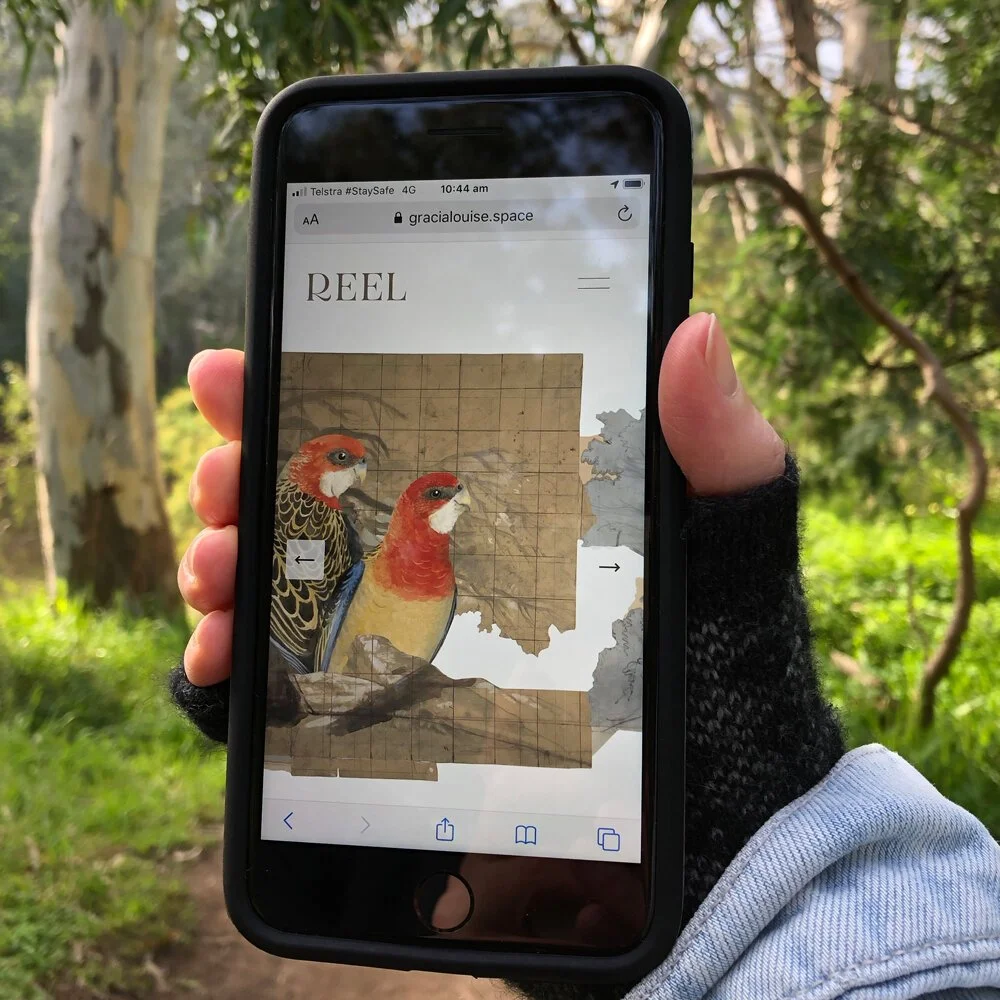
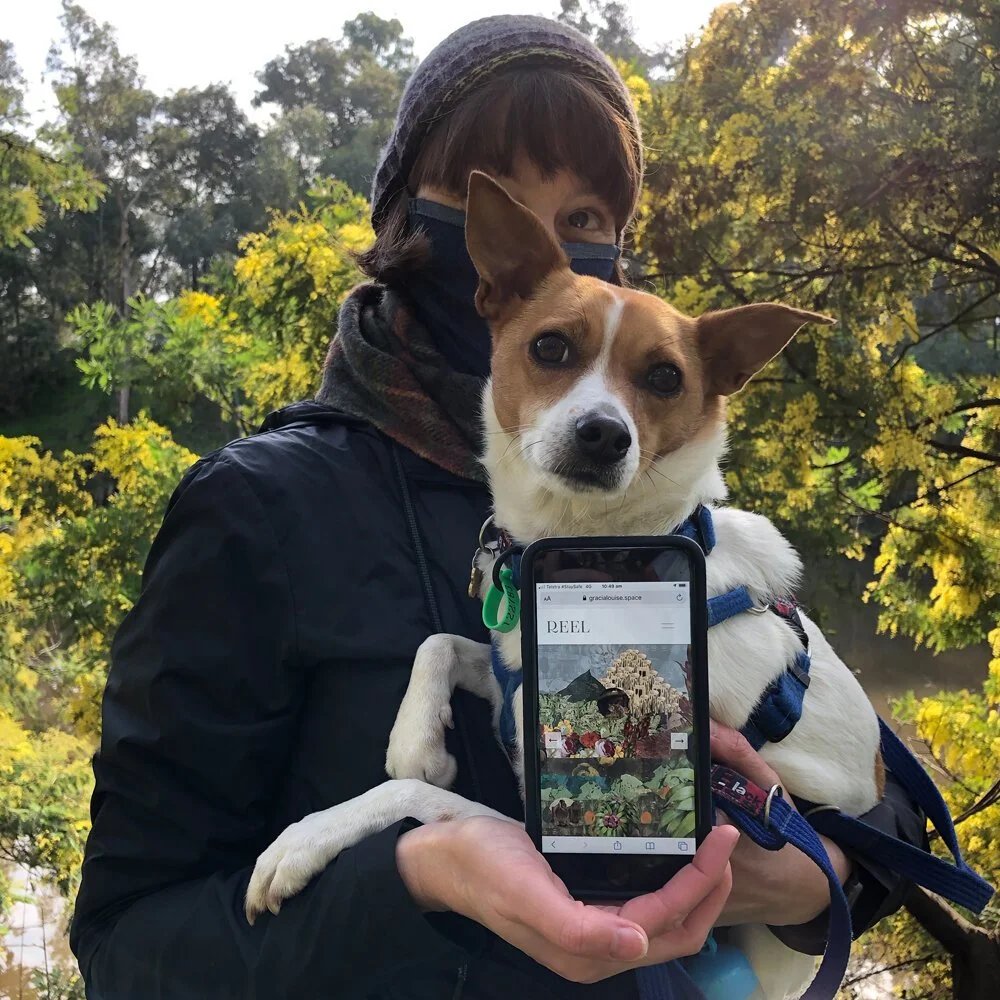
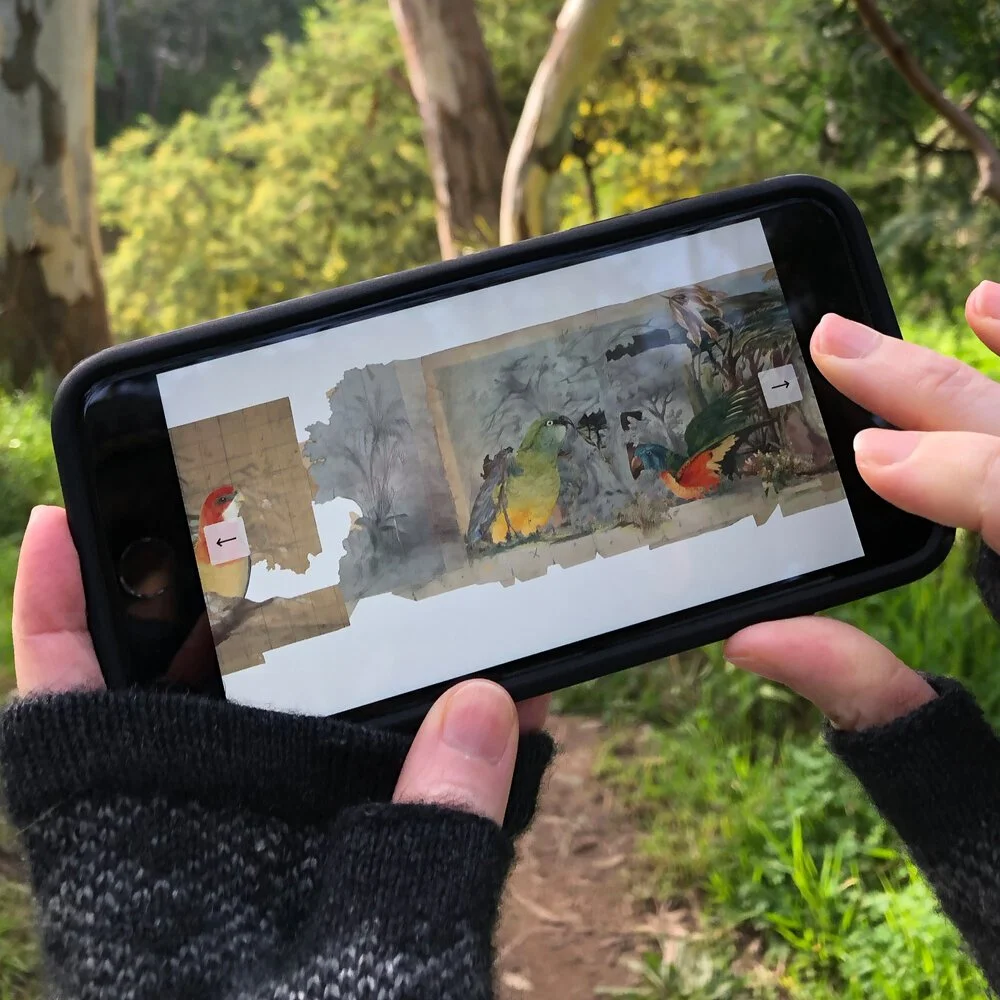
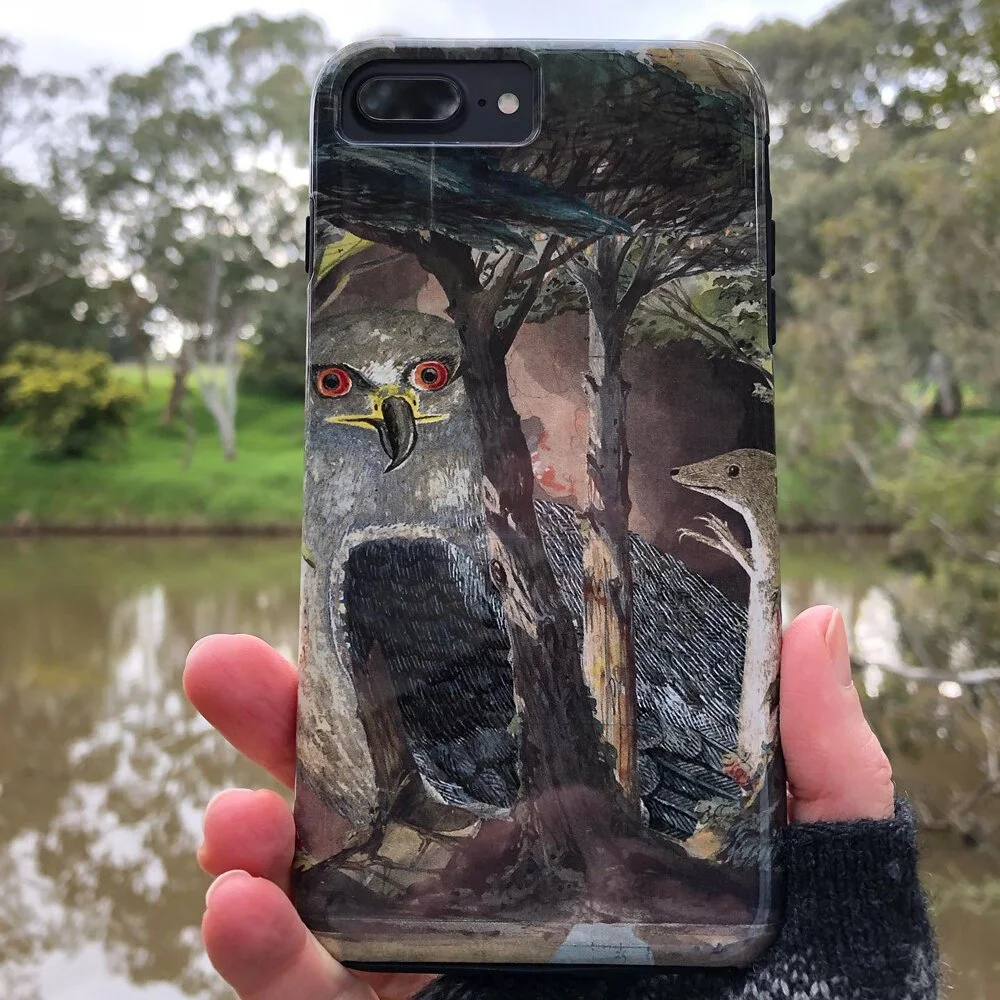
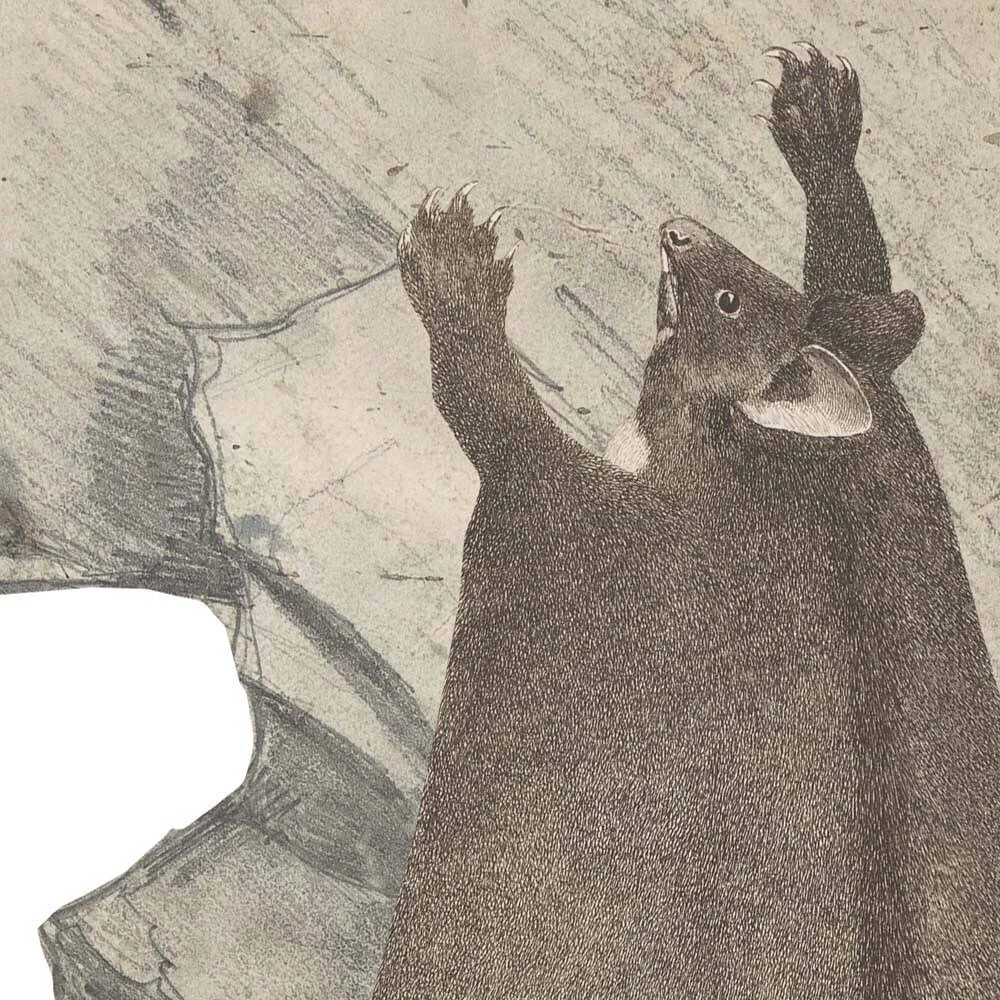
Launched in July 2020, Reel was our online viewing space, featuring variations of our original works on paper and large scale collages in a different format: a continuous digital reel. Created in 2020’s isolation, Reel, a second site, was a space, like a gallery, and not a gallery. A space where we could show you our work, up close. A .space with Greater gliders, and familiar faces.
Reel featured a continuous loop of imagery from our artists’ book set, A Hemline of Sky, Forest, and Water Through Smoke; our exhibition, Ripples in the Open; our artists’ book, Paw Pad Path; our exhibition; Looped, and suite of prints,Through a Glass Eye.
It ran for 5 years, and was officially retired in July 2025.
We invite you to spool through the archives to obtain a sense of what was. (Please note, in this archived guise, the sense of the continuous is somewhat lost, as you are taken back to the start, rather than held in intended eternal cycle.)
﹏
RELATED LINKS,
REEL (ARCHIVE)
A HEMLINE OF SKY, FOREST, AND WATER SERIES, 2020
RIPPLES IN THE OPEN, 2018–2019
PAW PAD PATH, 2018
LOOPED, 2017–2025
THROUGH A GLASS EYE, 2018–2019
IN LOCKDOWN PROJECTS, 2020
IN LOCKDOWN PROJECTS, 2021
RELATED POSTS,
WELL MAPPED
WHERE REALMS COLLIDE
LOOK CLOSER
INTRODUCING, REEL

Q & A
Answered for RMIT University School of Art student, Sam Pattinson
Thursday 27th August, 2026
After graduating from art school, how did you get started in your early career/practice?
True to the expression that in the end is the beginning, upon finishing art school we embarked on our first series of artists’ books, made in collaboration with one another, and with little understanding of what an artists’ book really was. We’d both loved working with books, in the sense of journals, zines, and the intimate/hard to display, but we didn’t really have a refined goal. Or, at least, looking back to the late ’90s, that’s how it feels. We liked the portability of the artists’ book, and the self-publish ethos of zines, and so our first series of six artists’ books centred around a loose theme of recording pockets of time.
We were successful in receiving an Australian Council Grant (New Work, Emerging Artist, in 2000), which enabled us to realise the project, and which also undoes the looseness of our earlier words. So, it seems, we did have a plan, after all, we just allowed wriggle room for the things you learn through research and doing along the way. This series of artists’ books was created with the idea of sharing in mind. Logistically, this was not really possible as they were a limited edition (of 10), but the thinking behind it is not so different to our work now: we are interested in the conversation and openness, and layering of information.
How did you find being collaborating artists affects your practice?
It gives us both the confidence to try something new or challenging, as we can be a safety net for each other. This also keeps us motivated, so in the natural ebbs, we can take turns in lifting each other.
Our collaboration, as you know, is one based on harmony as opposed to opposites or distinct roles, and this gives each of us space to experiment with all sorts of different ideas. It’s a pattern that really suits us both, and so, even when we are not collaborating, we collaborate unofficially and help each other out. In short, it is a joy to share the load, working collaboratively. If there is one downside, perhaps it is that we are often paid as one artist (for talks or workshops).
What challenges arise from balancing your practice with other work and responsibilities?
It is a constant juggle, a furious shuffle, a world of one thing receiving less for the sake of the other, but once you let go of the need for all things to look and be a certain way at all times, it eventually, hopefully smooths its way out. And in the trying to find the balance, another benefit of collaborating. If we are both working on the one project, it is a fun, if hairy ride, and the other person isn’t left with all the boring bits.
It also tends to be that all those wonderful opportunities or exciting, random projects will always fall one atop the other. Never staggered, but nearly always all at once. So sometimes the work takes priority and all the other day-to-day tasks pile up. In saying that, though, sometimes the break from an artwork is also good as it simmers away there while you are doing other things, and that can bring about the unexpected or an answer.
Have you continued to develop your technical skills beyond art school?
We try to see each new body of work or project as a chance to learn a new skill or to make something different or to work with a different or new material. In part to ensure we are engaged and not restless, and also because you don’t want people to be like, ‘huh, I’ve seen that from them before’.
Sometimes, we also get to work with master printmakers, like Martin King at the Australian Print Workshop, on a three-colour lithograph or a à la poupée hard-ground etching. So, while this is not a new technical skill we are developing, we are considering how we will highlight these techniques in our work. Which parts of the image could be hand-coloured, which parts need space to breathe, which parts will be lightly furred and which parts sketchy lines.
Incorporating more of the written word, too, is another way we are always trying to develop and grow. Another means to open a window for the viewer or reader.
Have you made any mistakes that you have learnt from?
So many, and all. Collage and collaboration seem a good way to implement this, for there is little that you cannot paste over with a patch or come up with a workaround. Perhaps you will ‘stick a fish on it’, that section where the book cloth doesn’t neatly align by a whisker. Perhaps the book will be a couple of pages more, so you need to manually add the additions by hand. Perhaps you will perforate this or that.
No matter the project, big or small, everything is important, and this we learnt through trial and error.
What advice would you give to newly graduating artists looking to get into the art world?
Find and polish or whittle your own unique voice. Stick at it, and then some more, year after year. Don’t be afraid to grow it into something else, if that suits, too. Stick to your own moral principles. And always submit your bio/artists statement on time.
We also particularly like Kurt Vonnegut’s advice to a group of high school students: “Practice any art, music, singing, dancing, acting, drawing, painting, sculpting, poetry, fiction, essays, reportage, no matter how well or badly, not to get money or fame, but to experience becoming, to find out what’s Inside you, to make your soul grow.”
To make your soul grow: what an aim!
Has your practice gone the direction you thought it would at university?
Yes, in the sense that we are still making our work and still doing our thing, and still forging our own path, but in another sense, it also looks wildly different to what we’d thought. At art school, we presumed that by now things would feel more stable, not less. That things would feel more fixed, and less held together by twine, but this is not the case. The footing is as wobbly as ever. Things feel just as uncertain as ever, which is a reflection of the world around us, really.
As artists with a commercial aspect to your practice, what you have learnt in selling your work?
We love making zines and artists’ books to sell at Sticky Institute’s Festival of the Photocopier or at the NGV’s Melbourne Art Book Fair. They are both a great deadline to work towards, and a wonderful chance to meet the people who also like similar things to you.
We have always tried to keep our work affordable, so we will have a zine for $3 ranging to an artists’ book, like the recent tunnel book, How will they know there’s no-one left, for $1300, by way of a tale about insects for $80. Ultimately, we’d like our work to find an audience, a reader, a home, and this loops us back to our very first artists’ book series. We make work to share and talk with and to others.
And that’s it, in a nutshell. Hope this helps.
Thanks for the opportunity.
Cheers,
G&L
“PRACTICE ANY ART… TO MAKE YOUR SOUL GROW” (Marginalia)
